Fir TreePrimary School

Computing
Subject Intent
At Fir Tree Primary School, we want children to become confident, creative, critical and responsible users of technology. Computing enables children to understand how digital technology works, how it can be used to solve problems and communicate ideas, and how it influences the world around them.
Our curriculum develops knowledge and skills across Computer Science, Information Technology and Digital Literacy. Children learn the principles of computational thinking, algorithms, programming and digital systems, while also developing the ability to create, communicate, organise and manipulate digital content. We want children to see technology as a tool for creativity, problem-solving and learning rather than simply as a means of consuming content. Through practical experiences, children are encouraged to explore, experiment, debug, evaluate and create.
A key part of our intent is to ensure that children develop the knowledge and judgement to use technology safely, responsibly and respectfully. This includes understanding online risks, evaluating information, making sensible choices about technology use and beginning to consider the wider impact of technology on individuals and society.
We also want children to understand that computing is a rapidly developing field and to experience technology beyond the familiar. Programming, physical computing, robotics, data logging and 3D design provide opportunities to broaden children's understanding of what technology can do and inspire future interests and aspirations.
Subject Implementation
We use the Teach Computing curriculum from the National Centre for Computing Education (NCCE) to support the planning and progression of Computing from Year 1 to Year 6. The curriculum is organised into progressive units covering Computing Systems and Networks, Creating Media, Programming, and Data and Information.
Lessons are designed to build knowledge over time. Particular care is taken with programming, where concepts are introduced and developed progressively so that children can draw upon previously learned knowledge and skills. Children are given opportunities to read and explore code before creating their own programs, with debugging and problem-solving forming an important part of the learning process.
Programming has a strong place within our Computing curriculum. Children use Scratch to develop their understanding of programming and computational thinking, creating animations, games, quizzes, interactive programs and other projects. As children progress, they encounter increasingly sophisticated programming concepts and are encouraged to test, debug, modify and evaluate their code.
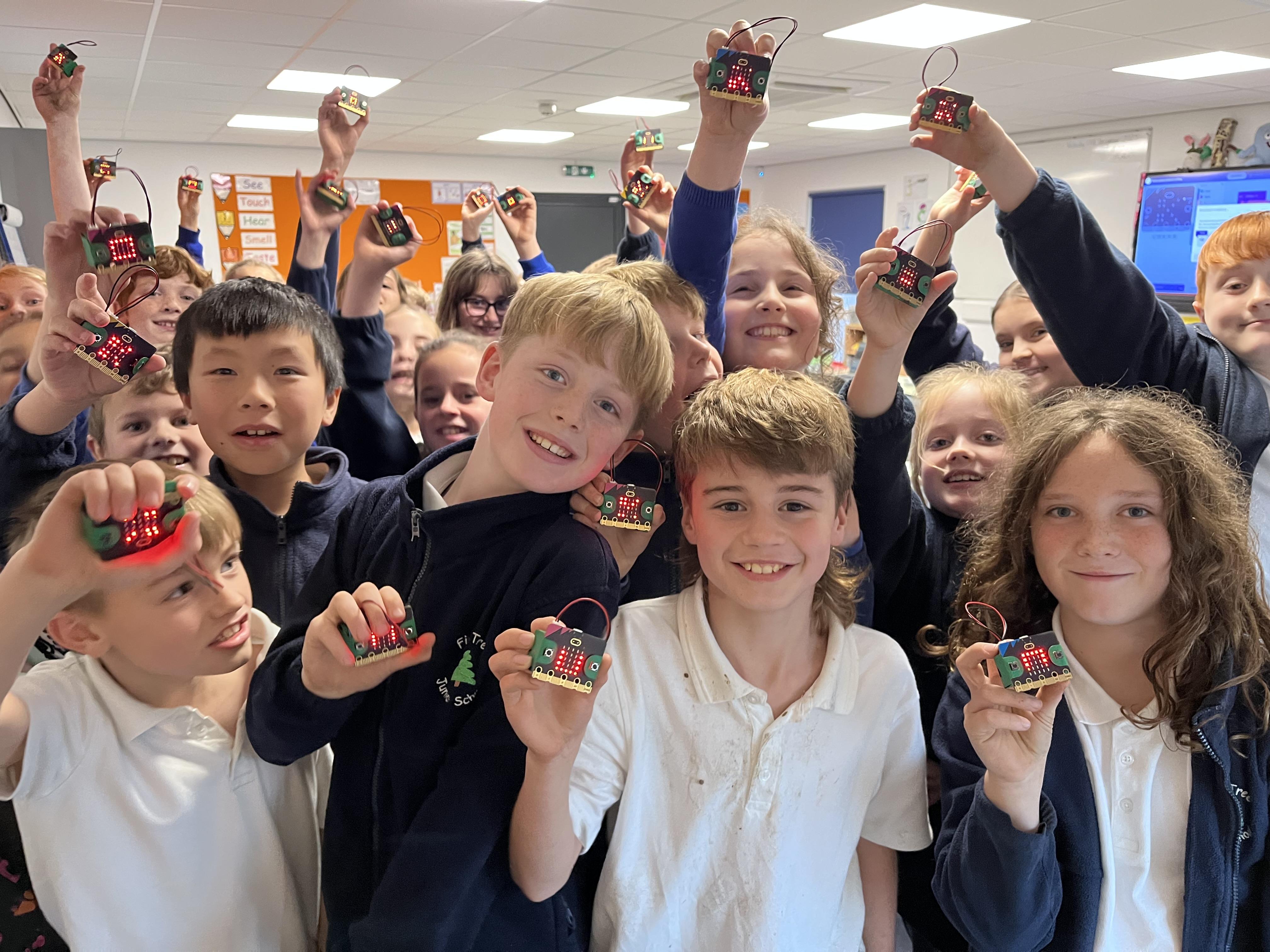
We also provide opportunities for children to experience physical computing and data logging, including the use of Micro and Crumble Kits. Micro can be used to collect and investigate data such as temperature, light, sound and movement, allowing children to see how computing can interact with and help us understand the physical world.
Information Technology is developed through purposeful use of a range of digital tools. Children use laptops and iPads to create, edit, present and communicate information, producing digital content such as animations, films, music, presentations, graphics and other multimedia projects. Where appropriate, technology is also used to enhance learning in other curriculum subjects.
Children are given opportunities to develop their understanding of emerging and creative technologies. Experiences such as 3D design using Tinkercad, physical computing and robotics help children understand how computing connects to real-world applications and different careers.
Computing is also supported by wider opportunities beyond the classroom. Code Club provides children with the opportunity to extend their programming skills and develop their own creative projects. Visitors and external experiences, such as robotics workshops, can further broaden children's understanding of the subject and provide authentic contexts for learning.
Digital literacy and online safety are embedded throughout the curriculum. Children learn how to search effectively, evaluate information, communicate appropriately and use technology safely and responsibly. Wider activities such as Safer Internet Day and age-appropriate discussions around online behaviour, artificial intelligence and technology use reinforce this learning.
Subject Overview
The curriculum provides a clear progression from the early development of digital skills and simple algorithms in Key Stage 1 towards increasingly complex programming, data handling, digital creation and understanding of computer systems in Key Stage 2.
Children also have opportunities to apply their Computing learning in meaningful contexts across the wider curriculum. For example, programming can be used to retell stories or create quizzes linked to subject knowledge, whilst digital media can be used to communicate learning in English, science, humanities and other subjects.
Examples of wider application include children using Scratch to create animations and games, programming interactive projects, using Micro for data logging, designing in Tinkercad and exploring robotics. These experiences help children understand that computing is not an isolated subject but a set of knowledge and skills that can be applied creatively across many areas of learning.
Assessment and Measuring Progress
Assessment in Computing is ongoing and is used to identify what children know, understand and can apply. Teachers use questioning, discussion, observation and practical tasks throughout lessons to identify misconceptions and adapt teaching where necessary.
Children demonstrate their learning through a combination of practical activities, programming tasks, digital projects and discussion. Teachers consider both the final outcome and the process children have used to reach it, including their ability to explain their thinking, solve problems, debug and make improvements.
Progress is measured against the knowledge and skills identified within the curriculum. Teachers assess children's developing understanding of Computer Science, Information Technology and Digital Literacy through the units taught, rather than relying solely on a finished digital product.
Particular attention is given to children's ability to apply previously learned knowledge independently. In programming, for example, progression is demonstrated through children's increasing ability to understand algorithms, write and modify code, identify errors and debug their programs. In Information Technology, children increasingly use a wider range of digital tools purposefully and creatively. In Digital Literacy, children develop increasingly sophisticated understanding of how to use technology safely, responsibly and critically.
Children are encouraged to talk about their learning and explain what they have created, how it works and how they have solved problems. Their work provides a valuable record of progression, including digital projects, programming outcomes, physical computing activities and other practical applications.
By the end of Year 6, we aim for children to have developed a secure foundation in computing and to be able to use technology with confidence, creativity, independence and responsibility. They should understand that technology can be used to solve problems, communicate ideas and create new things, whilst recognising the importance of making safe, informed and responsible choices in a digital world.
Smartphone Free Childhood - we've joined the movement!
We are pleased to share that our school is joining the Smartphone Free Movement, an initiative dedicated to supporting children in developing healthy, balanced relationships with technology.
What does this look like at Fir Tree?
- We have arranged our first parent talk which looks to engage families and provide them with balanced and supportive information to allow them to make the decisions they feel are right for them.
- We have invited in Papaya (Parents Against Phone Addiction in Young Adults) to give workshops to our Year 5 and 6 children which helps KS2 students critically evaluate their technology use and its impact on themselves and society.
- Updating school smartphone policy.
- Regular advice and support sent out to parents to help with smartphone use or no smartphone use.
- Encouragement towards getting parents to sign the parents pact.
- Safer internet Day - this year will be a focus on artificial intelligence.
- Further talks online and in person to support families.
- We are looking to engage with other primary and secondary schools in the area to join forces with our messaging.
Smartphone Free Childhood Parent Talk 2025 Slides
Examples of Learning